

West Bengal Elections 2026 Phase 1: The high-voltage battle for West Bengal reaches its first critical crescendo today (April 23) as 152 constituencies across the state go to the polls in Phase-1. With more than 3.22 crore electors eligible to cast their votes, the day marks the beginning of a decisive chapter in the contest between the incumbent Trinamool Congress (TMC) and a resurgent Bharatiya Janata Party (BJP).

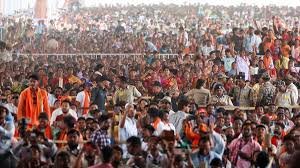
KOLKATA — The air in West Bengal is thick with anticipation and the scent of parched earth as the state prepares for its most consequential political showdown in a generation. At 7:00 AM today, April 23, 2026, polling stations across 152 constituencies opened their doors, marking the commencement of Phase 1 of the West Bengal Legislative Assembly elections.
With over 3.22 crore voters eligible to exercise their franchise in this opening round, the stakes could not be higher. This phase covers a massive geographical swathe, including the traditional BJP strongholds of North Bengal and the volatile frontier districts of South Bengal. For Chief Minister Mamata Banerjee, it is a fight to protect her fortress for a fourth consecutive term; for the Bharatiya Janata Party (BJP), it is an all-out charge to breach the “Red Road” to Nabanna. West Bengal Elections 2026 Phase 1
The Numbers Game: Seats and Electorate
The sheer scale of Phase 1 is unprecedented. Out of the 294 seats in the West Bengal Assembly, more than half—152 seats—are being decided today. West Bengal Elections 2026 Phase 1
NDTV Live Updates: West Bengal Elections Phase 1 – Real-time tracking of voter turnout and incident reports.
The Hindu: Bengal Votes for 152 Seats – In-depth coverage of the North Bengal tea belt and South Bengal border districts.
Geographic Spread
The voting is spread across 16 districts, effectively splitting the state’s political map:
-
North Bengal: All 8 districts (including Darjeeling, Kalimpong, Jalpaiguri, Alipurduar, Cooch Behar, Uttar Dinajpur, Dakshin Dinajpur, and Malda) are voting today. This region has 54 seats and was the primary engine of the BJP’s growth in 2021.
-
South Bengal: 8 districts (including Murshidabad, Nadia, Birbhum, Hooghly, Paschim Medinipur, Purba Medinipur, Bankura, and Purulia) are also in the fray. West Bengal Elections 2026 Phase 1

Voter Demographics
Approximately 3.6 crore citizens were originally registered, but following a controversial Special Intensive Revision (SIR) of the electoral rolls, the finalized list for this phase stands at roughly 3.22 crore eligible voters. This revision, which saw the deletion of nearly 90 lakh names statewide due to “duplication” or “permanent shifting,” has become a central campaign flashpoint.
Key Battlegrounds and High-Profile Faces
While 152 seats are up for grabs, all eyes are on a few “VIP” constituencies that will likely set the tone for the entire election results.
1. Nandigram: The Ultimate Grudge Match
Once again, Nandigram (Purba Medinipur) finds itself at the epicenter. Leader of the Opposition Suvendu Adhikari (BJP) is defending his turf. However, the TMC has deployed a strategic challenge by fielding Pabitra Kar, a former close aide of Adhikari, turning the contest into a deeply personal battle of local loyalties. West Bengal Elections 2026 Phase 1
2. North Bengal: The Saffron Bastion
In 2021, the BJP won 59 of the 152 seats currently voting, with a dominant performance in the North. Key candidates like Nisith Pramanik and Dr. Shankar Ghosh (Siliguri) are fighting to prove that the BJP’s “North Bengal Model” is still intact.
3. The Murshidabad-Nadia Belt
This region is a litmus test for the TMC-Congress-Left dynamics. With veteran leader Adhir Ranjan Chowdhury influencing the Congress bastions, the TMC is fighting to prevent a split in the minority vote that could inadvertently benefit the BJP.
The Narrative: “Sonar Bangla” vs. “Bengali Pride”
The campaign trail for Phase 1 has been a masterclass in polarized rhetoric. West Bengal Elections 2026 Phase 1
The BJP’s Pitch: The saffron party has leaned heavily on “Asol Poriborton” (Real Change). Their campaign, spearheaded by Prime Minister Narendra Modi and Home Minister Amit Shah, has focused on: West Bengal Elections 2026 Phase 1
-
Corruption Allegations: Highlighting various “scams” and central agency investigations against TMC leaders.
-
Security & Migration: Promised implementation of the CAA/NRC frameworks (a double-edged sword in border districts).
-
The “Double Engine” Promise: Arguing that Bengal can only prosper if the same party rules in Kolkata and New Delhi.
The TMC’s Defense: Mamata Banerjee, often campaigning from her signature wheelchair or on foot to symbolize resilience, has countered with: West Bengal Elections 2026 Phase 1.
-
“Bohiragoto” (Outsiders): Labeling the BJP as a party that does not understand Bengali culture.
-
Social Welfare: Leaning on the massive popularity of schemes like Lakshmir Bhandar (monthly cash transfers to women) and Sabooj Sathi.
-
Voter Deletion Row: Accusing the Central Government of using the Election Commission to “delete” genuine voters to rig the outcome.
Security: A State Under Lockdown
Given West Bengal’s history of poll-related friction, the Election Commission (EC) has left nothing to chance.
-
Central Forces: A record 2,450 companies of Central Paramilitary Forces (approximately 2.5 lakh personnel) have been deployed. West Bengal Elections 2026 Phase 1
-
Super-Sensitive Booths: Out of the 44,376 polling stations, over 7,300 have been categorized as “critical” or “super-sensitive.” These booths feature 100% webcasting and a higher ratio of central forces to local police.
-
AI Surveillance: For the first time, the EC is using AI-based monitoring to track crowd density and suspicious movements outside polling stations in real-time.
What to Expect as the Day Unfolds
As the first queues form under the morning sun, the mood is one of quiet determination. In the hills of Darjeeling, tea garden workers are expected to turn out in large numbers, while in the plains of Murshidabad, the long lines of rural voters will be the deciding factor.
The “Peaceful Poll” Challenge: The biggest victory today wouldn’t just be for a political party, but for the democratic process itself. If Phase 1 passes without the sporadic violence that has marred previous local body elections, it will be a significant win for the Election Commission’s credibility. West Bengal Elections 2026 Phase 1
The Road Ahead: This is only the beginning. Phase 2, covering the remaining 140 seats—including the high-density urban corridors of Kolkata and its suburbs—is scheduled for April 29. The fate of the 1,452 candidates contesting today will remain sealed in the EVMs until the counting day on May 4, 2026. West Bengal Elections 2026 Phase 1