

The Shadow Strategy: Analyzing Reports of Saudi Arabia’s Private Backchannel on Iran
Saudi Crown Prince Mohammed bin Salman: The geopolitical landscape of the Middle East is currently navigating one of its most volatile periods in recent history. Amidst the ongoing military escalation between the United States, Israel, and Iran—dubbed “Operation Epic Fury”—a complex web of public diplomacy and private backchanneling is coming to light.

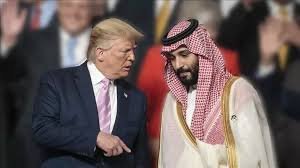
This report delves into the intricate details of these claims, the historical precedents of Saudi-Iranian relations, the military realities on the ground, and the broader economic implications for global trade and security.
Saudi Arabia’s MBS speaking regularly with Trump, urging harsh action against Iran — NYT
Saudi source denies NYT report which claimed Kingdom pushing for prolonged Iran war
Unpacking the Core Reports
In mid-March 2026, The New York Times, citing several unnamed White House officials, reported that Crown Prince Mohammed bin Salman has been in regular contact with the US administration, privately advising the President to “keep hitting the Iranians hard.”
The Private vs. Public Narrative
This revelation highlights a stark contrast between Saudi Arabia’s outward diplomatic posture and its internal strategic objectives.
-
Public Posture: Officially, Saudi Arabia and other Gulf Cooperation Council (GCC) nations have expressed deep concern over the escalation. They have publicly condemned ongoing Iranian strikes against GCC countries, warning that the violence threatens regional stability. Furthermore, reports indicate Saudi officials have communicated to Iran that they will not allow their airspace or territory to be used for offensive military actions against Tehran. Saudi Crown Prince Mohammed bin Salman
-
Private Backchannel: Privately, however, intelligence and diplomatic leaks suggest a different calculus. The reports indicate that the Crown Prince has run a hawkish backchannel, advocating for sustained pressure to permanently degrade Iran’s military and nuclear capabilities. Saudi Crown Prince Mohammed bin Salman
The Historical Echo: “Cut Off the Head of the Snake”
The reported advice from the Crown Prince heavily echoes the historical stance of the Saudi monarchy. In 2010, a trove of leaked diplomatic cables revealed that the late Saudi King Abdullah had repeatedly urged Washington to take forceful action against Iran’s nuclear program, famously advising the US to “cut off the head of the snake.” Saudi Crown Prince Mohammed bin Salman
The current reports suggest that MBS is operating from the same foundational security doctrine, viewing a militarily weakened Iran as a prerequisite for long-term stability in the Arabian Peninsula. Saudi Crown Prince Mohammed bin Salman
The Military Context: Operation Epic Fury
To understand the weight of these reported diplomatic exchanges, it is essential to look at the unprecedented scale of the military operations currently underway. Saudi Crown Prince Mohammed bin Salman
The United States has engaged in a sweeping aerial campaign targeting Iran’s defense industrial base, naval assets, and air defense systems. The US administration recently claimed to have struck over 7,000 targets across Iranian territory.
The “Day After” Calculus for Gulf Nations
Despite the reported private encouragement for US strikes, Saudi Arabia and neighboring Gulf states, such as the UAE, remain highly reluctant to launch direct, publicly acknowledged attacks on Iran or explicitly join a military coalition. This hesitation is rooted in what defense analysts refer to as the “Day After” calculus. Saudi Crown Prince Mohammed bin Salman
Fear of Direct Retaliation
Gulf states are acutely aware of their geographic vulnerability. In mid-March alone, Saudi air defenses had to intercept multiple ballistic missiles and drones targeting Riyadh and key eastern hydrocarbon facilities.
If Saudi Arabia were to publicly claim responsibility for attacks on Iranian soil, it would almost certainly invite a massive, direct retaliation. Iran possesses a vast, decentralized network of proxy militias across Yemen, Iraq, and Syria capable of executing asymmetric warfare. Saudi Crown Prince Mohammed bin Salman
Infrastructure Vulnerability
The Gulf’s economic lifeblood—its oil and gas refineries, desalination plants, and commercial shipping ports—represents a massive, exposed target. The memory of the 2019 Abqaiq–Khurais attack, which temporarily knocked out half of Saudi Arabia’s oil production, remains a potent deterrent against public escalation. Saudi Crown Prince Mohammed bin Salman
Therefore, the Gulf strategy appears to rely on the United States and Israel to bear the operational burden and international scrutiny of dismantling Iran’s military apparatus, while the GCC states focus on defensive interceptions and diplomatic shielding.
Economic Defensive Measures and Global Trade
While the geopolitical drama unfolds in diplomatic backchannels, the economic maneuvers on the ground provide concrete evidence of Saudi Arabia’s strategic preparations for this conflict. Saudi Crown Prince Mohammed bin Salman
Rerouting the Oil Economy
Aware of the immense risks to its eastern, Gulf-facing facilities, Saudi Arabia has actively insulated its economy. A critical component of this is the massive East-West pipeline, which reroutes millions of barrels of oil per day away from the vulnerable Persian Gulf and Strait of Hormuz, directing them safely to the Red Sea port of Yanbu.
This infrastructural pivot proves that Riyadh has long planned for a scenario where the Gulf becomes a hostile maritime combat zone. The pipeline ensures that even if Iran attempts to blockade the Strait, Saudi oil can still reach global markets, allowing the Kingdom to survive the economic shockwaves of a regional war. Saudi Crown Prince Mohammed bin Salman
The Choke Point: The Strait of Hormuz
The conflict has severely disrupted global trade routes. The Strait of Hormuz, a narrow waterway through which roughly 20% of the world’s traded oil passes, remains highly vulnerable.
-
Shipping Disruptions: Iranian mining threats and short-range missile capabilities have effectively halted standard tanker traffic, driving up maritime insurance premiums and forcing global supply chains to adapt.
-
Coalition Building: The US has publicly pressed international allies—particularly those heavily dependent on Gulf oil flows, which includes major Asian economies—to step up and help secure the Strait.
For nations heavily reliant on imported oil, such as India and several European states, the outcome of this bottleneck directly impacts domestic inflation, fuel prices, and broader economic stability. Saudi Crown Prince Mohammed bin Salman
The Future of the Middle Eastern Balance of Power
If the reports regarding MBS’s private directives are accurate, they reveal a high-stakes gamble by the Saudi leadership. The Crown Prince is attempting to thread a microscopic needle: weakening his primary regional rival irreparably without dragging his own rapidly modernizing country into a devastating, infrastructure-destroying crossfire.
The Vision 2030 Factor
At the heart of MBS’s domestic policy is “Vision 2030,” an ambitious economic restructuring plan designed to diversify Saudi Arabia away from oil dependency, boost tourism, and attract massive foreign investment. A prolonged, direct war on Saudi soil would be catastrophic for this vision. Saudi Crown Prince Mohammed bin Salman
By utilizing a private backchannel to encourage US action while maintaining a public façade of de-escalation, Saudi Arabia hopes to achieve the security environment necessary for Vision 2030 to thrive, completely free from the looming shadow of Iranian proxy threats.
The Power Vacuum
The potential dismantling of Iran’s military command structure and the degradation of its proxy networks would leave a massive power vacuum in the Middle East. Saudi Arabia, armed with substantial financial reserves and an increasingly assertive foreign policy, would be positioned as the undisputed dominant power in the region. Saudi Crown Prince Mohammed bin Salman
However, this transition is fraught with risk. The collapse of central authority in Iran or the desperate lashing out of fragmented proxy groups could trigger a wave of unpredictable, asymmetric violence that ignores national borders.
Summary and Key Takeaways
Economic Insulation: Saudi Arabia’s strategic rerouting of its oil exports to the Red Sea demonstrates long-term preparation for Gulf instability.
Historical Continuity: The current posture aligns with decades of Saudi strategic thinking, prioritizing the neutralization of Iran’s military and nuclear potential. Saudi Crown Prince Mohammed bin Salman