
West Asia War Updates: The fragile peace in West Asia is facing its ultimate test. In a highly anticipated pre-recorded video statement, Israeli Prime Minister Benjamin Netanyahu officially acknowledged a temporary halt in direct fighting with Iran. However, the tone from Jerusalem was anything but peaceful. Netanyahu issued a stern warning to Tehran, vowing that any future aggression would be met with overwhelming and crushing military force.
This sudden pause in hostilities follows an intense 24-hour window where Israel and Iran traded heavy direct missile strikes, breaking a two-month-old truce and threatening to plunge the entire region back into an uncontrolled, full-scale regional war. While diplomats behind the scenes work around the clock to restore calm, the operational reality on the ground indicates that both nations remain on a hair-trigger alert.
The Video Address: Inside Netanyahu’s Hardline Stance
Speaking directly to the citizens of Israel and the international community, Benjamin Netanyahu clarified the circumstances that led to the sudden cessation of direct cross-border fire. According to the Prime Minister, the operational pause was not a result of Israeli hesitation, but rather a direct consequence of Israel’s military dominance hitting home in Tehran.
“At present, the fire on this front has been halted, because after the terrorist regime in Tehran was struck, it stopped attacking us. But if that terrorist regime makes the mistake of attacking us again, we will respond with force.”
Challenging the “New Equation”
Netanyahu explicitly rejected recent strategic maneuvers by Iran and its Lebanese ally, Hezbollah, to reshape the rules of engagement in the region. He emphasized that his cabinet would never tolerate an environment where proxy groups or sovereign states could launch strikes against Israeli soil without facing immediate, devastating retaliation inside their own borders.
-
A Clear Warning: “They thought they could launch attacks from Lebanon and Iran against Israel and that we would not act. That did not happen, and it will not happen. Not on my watch,” Netanyahu declared. West Asia War Updates
-
The Position of Strength: The Israeli Premier asserted that despite 100 days of intense conflict across multiple fronts, Israel and its military forces are “stronger than ever,” while leaving both Tehran and Hezbollah structurally degraded.
The 24-Hour Escalation: How the Truce Shattered
The temporary cessation of hostilities comes right after the most dangerous direct military exchange between Israel and Iran since the war began. The timeline of events reveals how quickly localized proxy battles can escalate into a wider regional crisis.
The Iranian Missile Barrage
Following a series of precise Israeli strikes against high-value Hezbollah positions in Beirut, Iran launched three massive waves of ballistic missiles aimed directly at central Israel. Air defense sirens echoed across major cities as interceptors lit up the night sky. While Israel’s defense systems neutralized a majority of the incoming threats, the sheer scale of the attack marked a dangerous escalation.
Israel’s Retaliation Inside Iran
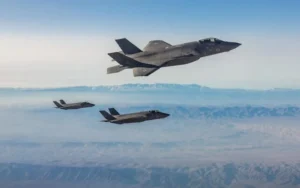
Defying immediate warnings from international allies, Netanyahu ordered the Israel Defense Forces (IDF) to execute deep strikes inside Iranian territory. West Asia War Updates
-
Targeting Ballistic Infrastructure: Israeli jets successfully targeted and hit a major petrochemical facility in the city of Mahshahr.
-
The Strategic Impact: State intelligence confirmed the plant was actively producing key chemical materials used in Iran’s long-range ballistic missile program, delivering a direct blow to Tehran’s domestic manufacturing capabilities.
The Growing Rift Between Trump and Netanyahu
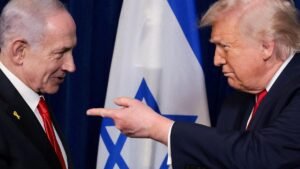
Behind the military maneuvers lies a complex web of international diplomacy, specifically involving United States President Donald Trump. The latest exchange of fire has highlighted growing operational differences between Washington and Jerusalem.
Trump’s Push for the Grand Peace Deal
President Trump has been working aggressively to secure a comprehensive, long-term US-Iran peace deal. Just hours before Israel launched its retaliatory strikes, Trump explicitly requested Netanyahu to hold back, fearing that an Israeli counter-strike would completely derail sensitive diplomatic negotiations. West Asia War Updates
In a public statement to major media outlets, Trump highlighted the proximity of a diplomatic breakthrough:
“We’re very close. I would say an agreement would be signed on Monday, Tuesday or Wednesday of this coming week. And now this takes place.” West Asia War Updates
The “Shoulder to Shoulder” Alliance Strained
When the conflict broke out 100 days ago, Trump and Netanyahu operated in complete harmony, boasting of unprecedented coordination. However, as the war has dragged on, their political paths have diverged.
Netanyahu faces intense domestic political pressure ahead of elections this fall. To maintain his political standing, he must project absolute strength against Hezbollah and Iran, making him wary of appearing overly subservient to Washington’s diplomatic timeline. Netanyahu confirmed he discussed these red lines with the US President, stating that Israel retains an absolute, non-negotiable right to self-defense that it will use whenever necessary. West Asia War Updates
Deepening Operations in Southern Lebanon
Netanyahu made it clear that the halt in fighting with Iran does not apply to southern Lebanon. The IDF is pushing forward with extensive ground and air campaigns designed to permanently clear out Hezbollah’s defensive infrastructure along the Beaufort Ridge. The objective remains focused on destroying massive, deeply buried underground storage facilities to ensure displaced Israeli citizens can safely return to northern border towns. West Asia War Updates
The Houthi Threat in the Red Sea
Simultaneously, Yemen’s Iran-backed Houthi rebels have re-entered the fight with aggression. The group fired long-range missiles toward southern Israel and announced a renewed blockade on all Israel-affiliated commercial vessels navigating through the critical Bab el-Mandeb Strait. This has immediately reignited anxieties across global shipping syndicates, threatening to drive up maritime insurance premiums once again. West Asia War Updates
Energy Markets and the Strait of Hormuz
The primary reason global markets are highly sensitive to this conflict is Iran’s ongoing control over the Strait of Hormuz. A fifth of the world’s crude oil and liquefied natural gas passes through this narrow chokepoint. The threat of a full-scale war has kept global energy prices artificially high, making everyday food items and basic utilities more expensive across developing economies.
International Evacuations and Travel Advisories
As the security situation fluctuates wildly, foreign governments are taking no chances. Following the missile exchanges, the Indian Embassy in Iran issued an urgent, high-priority travel advisory. The mandate strongly advises all Indian nationals to completely avoid traveling to the region and urges citizens currently residing within Iran to utilize any available commercial transportation options to leave the country immediately. West Asia War Updates