

West Asia war updates U.S. According to senior diplomatic officials, both Washington and Tehran have agreed to immediately halt all active military hostilities. Furthermore, emergency high-level talks have been scheduled to take place in Doha, Qatar, on Tuesday, June 30, 2026

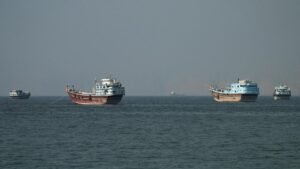
This breaking development comes at a critical juncture for global energy security and geopolitical stability. Below is a comprehensive breakdown of the escalating conflict, the breakdown of the previous ceasefire, the economic fallout, and what to expect from the high-stakes Doha summit. West Asia war updates U.S.
The Breakthrough: De-escalation and the Shifting Venue to Doha
The announcement of a temporary “stand down” came late on Sunday after intense, back-channel diplomacy mediated by Qatar and Pakistan. According to reports first published by Axios and later corroborated by major international networks including CNN, senior American and Iranian officials confirmed that kinetic activities would pause to allow diplomats to take center stage.
“We decided to stop all the kinetic activity,” a senior U.S. official told media outlets, using the military term for active airstrikes, drone attacks, and missile bombardments. A second official confirmed that both sides will stand down “for now” so that commercial shipping vessels can begin moving freely again. West Asia war updates U.S.
Why the Location Mattered
Interestingly, high-level technical teams from both countries had originally planned to meet in Switzerland this week to discuss broader, long-term frameworks, including nuclear oversight and structural sanctions relief. However, the unexpected military flare-up over the weekend forced a chaotic shift in plans.
The venue was rapidly moved to Doha, Qatar, and the core agenda was aggressively narrowed down to one primary crisis: resolving the immediate military standoff over the Strait of Hormuz.
What Caused the Sudden Breakdown of the Peace Deal?
To understand why this emergency summit is necessary, one must look at the fragile June 17 Memorandum of Understanding (MoU). Signed just weeks prior, the MoU was supposed to solidify an earlier April ceasefire, offering a 60-day window to negotiate a permanent settlement. West Asia war updates U.S.
Under the June 17 agreement:
-
Iran committed to: Guaranteeing the safe, unhindered passage of global commercial vessels through the Strait of Hormuz.
-
The United States committed to: Lifting its aggressive naval blockade of Iranian ports, allowing Tehran to resume limited economic activity.
However, the deal lacked a vital tool for real-time crisis management: an operational military hotline.
The Misunderstanding at Sea
During preliminary talks led by U.S. Vice President JD Vance and the Iranian delegation, both sides agreed to establish an emergency maritime hotline connecting the U.S. military directly with the Islamic Revolutionary Guard Corps (IRGC). The goal was to prevent accidental skirmishes in the crowded waterways. West Asia war updates U.S.
By Saturday, June 27, that hotline was still not operational. Concurrently, Iran began enforcing strict, unilateral tracking measures, insisting that international ships route themselves through specific paths chosen by Tehran. Washington viewed this as a direct violation of the “free passage” clause, while Tehran claimed it was standard maritime monitoring.
The technical disagreement exploded into active warfare:
-
The Trigger: An Iranian one-way attack drone struck the commercial vessel M/T Kiku, following a previous incident involving the M/V Ever Lovely.
-
The U.S. Response: U.S. Central Command (CENTCOM) launched heavy retaliatory strikes against multiple targets inside Iran, including coastal radar installations, drone storage facilities, and missile sites.
-
The Iranian Counter-Strike: The IRGC responded by firing missiles at eight separate U.S. military logistics and support locations in Bahrain and Kuwait. West Asia war updates U.S.
High Stakes: Donald Trump’s Ultramaximum Pressure Warning
The sudden willingness of both sides to sit down in Doha is heavily driven by the sheer scale of military devastation threatened over the weekend. U.S. President Donald Trump took to social media to issue an absolute, existential warning to the Iranian leadership if American forces were forced to resume full-scale combat operations.
“There may come a point when we are no longer able to be reasonable, and will be forced to militarily complete the job that we very successfully started,” President Trump posted on Truth Social. “If that happens, the Islamic Republic of Iran will no longer exist.”
This rhetoric underscored the immense pressure facing Iranian negotiators. While hardliners in Washington have argued that continuing diplomacy with Tehran is counterproductive, the White House has left the door open for financial and humanitarian incentives—provided Iran demonstrates absolute compliance. West Asia war updates U.S.
The $6 Billion Leverage
A major economic carrot currently hanging in the balance is $6 billion in frozen Iranian oil revenues held in Qatari central bank accounts. The Trump administration previously agreed to allow Iran phased access to these funds, but under incredibly strict conditions:
-
The money must be used exclusively for purchasing non-sanctioned, humanitarian goods.
-
All food, corn, wheat, soybeans, and medical supplies must be bought directly from American farmers and manufacturers.
-
Further releases of an additional $6 billion are entirely dependent on Iran honoring maritime peace and allowing deep nuclear inspections. West Asia war updates U.S.
Global Financial Fallout: Oil Prices on a Knife’s Edge
The West Asia conflict isn’t just a localized geopolitical crisis; it is an economic bottleneck that instantly impacts global markets. The Strait of Hormuz is the world’s most critical oil transit chokepoint, with roughly 20% of the world’s petroleum passing through its narrow waters daily.
As the tit-for-tat strikes escalated over the weekend, energy markets reacted with immediate volatility.
| Oil Benchmark | Price Per Barrel | Daily Increase | Market Sentiment |
| Brent Crude Futures | $72.49 | +0.69% ($0.50) | High Vulnerability to Shipping Delays |
| U.S. West Texas Intermediate (WTI) | $69.96 | +1.05% ($0.73) | Sensitive to Middle East Supply Disruptions |
Market analysts note that while the current price hikes are modest, a permanent collapse of the Doha talks on June 30 could easily send crude prices surging past the $80-to-$90 range, triggering widespread inflation across Western and Asian economies.
The Broader Picture: Secondary Fronts in Lebanon and Israel
While the U.S.-Iran dynamic forms the spine of this conflict, the war in West Asia involves interconnected regional actors whose actions could easily sabotage the Doha summit before it even begins. West Asia war updates U.S.
1. The Israel-Lebanon Ceasefire Friction
Simultaneously, a highly fragile trilateral framework agreement involving Lebanon, Israel, and the United States is being tested. The Israeli military recently announced the destruction of a massive, 200-meter-long Hezbollah attack tunnel in southern Lebanon, buried 25 meters deep and packed with launch shafts and heavy weaponry.
While a technical truce remains on paper, the political realities on the ground are crumbling:
-
Hezbollah’s Stance: The militant group stated it reserves the absolute right to “defend its homeland” and launch retaliatory strikes, accusing Israel of blatant ceasefire violations. West Asia war updates U.S.
-
The Lebanese Parliament’s Rejection: Lebanese Parliament Speaker and Hezbollah ally, Nabih Berri, openly rejected the current peace framework. Berri declared the deal “will not pass” because it conditions the withdrawal of Israeli troops on the complete disarmament of Hezbollah—a demand he labeled as an “agreement of dictates.”
2. The Internal Strain on Israel
The prolonged conflict has placed an immense domestic and military strain on Israel. Recent ballistic missile impacts in cities like Arad and Dimona wounded nearly 200 civilians and leveled community structures. While air defense systems have mitigated catastrophic losses, the economic and psychological toll of a multi-front war has created an incredibly tense political environment for Prime Minister Benjamin Netanyahu’s government. West Asia war updates U.S.
What to Expect from the June 30 Doha Talks
When technical teams and senior diplomats convene in Doha on Tuesday, they will not be looking to solve decades of philosophical animosity. Instead, they will be focused on a highly transactional list of operational stabilization measures.
The primary objectives of the emergency summit include:
-
Activating the Maritime Deconfliction Hotline: Finalizing the immediate technical links between CENTCOM and the IRGC to prevent miscommunications over commercial shipping identities.
-
Defining “Safe Passage” Boundaries: Establishing clear, mutually agreed-upon transit corridors within the Strait of Hormuz so Iranian coastal forces can verify cargo without impeding global trade. West Asia war updates U.S.
-
Sequencing Sanctions vs. Inspections: Ironing out the exact timeline for Iran’s nuclear compliance. The U.S. is demanding indefinite, unrestricted International Atomic Energy Agency (IAEA) access to damaged nuclear sites like Natanz, Fordow, and Isfahan, where weapon-grade uranium is believed to be secured. Iran, conversely, is demanding immediate verification of sanctions relief before allowing inspectors back to those specific facilities. West Asia war updates U.S.
The world watches Doha with bated breath. While both empires have shown they are willing to step back from the edge of the cliff, the margin for error in the waters of West Asia has never been thinner.