

Petrol and Diesel Prices on June 3 The daily commute across India continues to feel the financial strain as fuel prices hover at their highest levels in four years. On Wednesday, June 3, state-owned Oil Marketing Companies (OMCs) kept retail petrol and diesel prices unchanged. While this brings a momentary sigh of relief to motorists, the underlying anxiety remains:

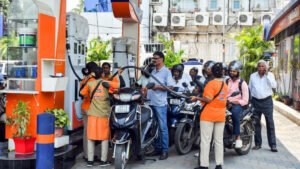
This temporary pause follows a volatile second half of May, which saw a series of aggressive price revisions. Following the conclusion of assembly elections in five states, OMCs ended a long-standing price freeze and executed four consecutive price hikes within an 11-day window. The last major hit occurred on Monday, May 25, when petrol and diesel rates were slashed with a heavy upward revision of over ₹2.50 per litre. In total, retail fuel prices have surged by nearly ₹7.50 per litre since May 15, pushing petrol well past the psychological ₹100-per-litre mark in the national capital and triggering widespread concerns about cascading inflationary pressures.
City-Wise Fuel Rates on June 3: What You Pay Today
Fuel prices in India vary significantly from state to state due to local levies, Value Added Tax (VAT), and freight charges. Currently, fuel consumers in Telangana and West Bengal are paying some of the highest retail rates in the country, while Delhi remains relatively cheaper among the major metros. Petrol and Diesel Prices on June 3.
Goodreturns Fuel Price Monitor and Petrol and Diesel Prices on June 3.
Petrol and Diesel Rates in Top Metro Cities
| City | Petrol Price (per Litre) | Diesel Price (per Litre) |
| Hyderabad | ₹115.69 | ₹103.82 |
| Kolkata | ₹113.51 | ₹99.82 |
| Mumbai | ₹111.21 | ₹97.83 |
| Bengaluru | ₹110.91 | ₹98.80 |
| Chennai | ₹107.77 | ₹99.55 |
| New Delhi | ₹102.12 | ₹95.20 |
Fuel Prices in Tier-2 Cities and NCR
-
Jaipur: Petrol at ₹112.66/litre; Diesel at ₹97.78/litre
-
Thiruvananthapuram: Petrol at ₹115.49/litre; Diesel at ₹104.40/litre
-
Bhubaneswar: Petrol at ₹108.97/litre; Diesel at ₹100.68/litre
-
Gurugram (NCR): Petrol at ₹102.62/litre; Diesel at ₹95.30/litre
-
Noida (NCR): Petrol at ₹101.96/litre; Diesel at ₹95.44/litre
-
Lucknow: Petrol at ₹101.89/litre; Diesel at ₹95.36/litre
Why Are Fuel Prices Skyrocketing? The Global Energy Crisis
The sudden surge at the fuel pumps isn’t an isolated domestic issue; it is directly tethered to escalating geopolitical tensions in West Asia. The ongoing conflict in the Middle East has heavily disrupted global energy supply chains, directly hitting major shipping corridors and trade routes. Petrol and Diesel Prices on June 3
The Vulnerability of India’s Oil Supply
India is exceptionally vulnerable to international energy shocks, importing over 85% of its total crude oil requirements. The West Asian crisis has cast a direct shadow on these imports:
-
Supply Disruptions: Close to 40% of India’s crude imports, 65% of its natural gas, and nearly 90% of its LPG supplies originate from countries in the Gulf region.
-
The Strait of Hormuz Bottleneck: Shipping lanes through the critical Strait of Hormuz have become highly volatile. Elevated insurance premiums for oil tankers and delayed transit times have significantly pushed up the landed cost of crude oil.
-
The Crude Price Benchmark: International benchmark Brent crude has consistently breached the $100 per barrel mark, fluctuating heavily between $105 and $115 per barrel over the last few weeks.
-
What the Ministry Says: To prevent domestic panic, the Ministry of Petroleum and Natural Gas issued a statement clarifying that actual physical fuel supplies within the country remain stable and adequate. The government has urged citizens to avoid panic buying at petrol pumps to ensure smooth distribution during this high-demand period.
The Financial Dilemma: Oil Marketing Companies Facing Deep Losses
Despite the massive ₹7.50 per litre cumulative hike borne by Indian consumers since mid-May, state-run oil companies—Indian Oil Corporation (IOC), Bharat Petroleum Corporation Limited (BPCL), and Hindustan Petroleum Corporation Limited (HPCL)—argue that the current retail prices are still not aligned with reality.
Understanding “Under-Recoveries”
In Indian energy parlance, an “under-recovery” occurs when the retail selling price at the pump falls short of the international cost-reflective parity price.
Even though these three major state-owned OMCs, which command over 90% of the domestic market, reported a combined net profit of ₹77,821 crore for the previous fiscal year (FY 2025–26), those numbers are highly deceptive.
-
The Inventory Lag Effect: The robust profits of the past fiscal year were a product of cheap crude inventory purchased months prior to the West Asian breakout. Indian OMCs typically operate on a 50-to-60-day buffer of crude inventory.
-
Massive Daily Losses: Union Petroleum Minister Hardeep Singh Puri previously highlighted that state retailers have been absorbing significant daily losses to shield consumers from the full brunt of global price spikes. Industry analysts estimate that OMCs have been facing under-recoveries of several hundred crores per day on the combined sales of petrol, diesel, domestic LPG, and jet fuel as costlier crude enters the refining cycle.
Shifting Dynamics in Retail Markets
Because state-run pumps are keeping prices artificially lower than true global parity to maintain economic stability, an interesting market shift has occurred: Petrol and Diesel Prices on June 3
-
Bulk Buyers Switching Over: Bulk consumers like industrial units, transport fleets, and telecom tower operators—who are typically charged market-linked rates—have started shifting their purchases to retail public sector pumps to save on costs.
-
Private Retailers Strained: Private fuel retailers (such as Jio-bp and Nayara Energy) have been forced to price their fuel much higher than PSU pumps to prevent running out of business. As a result, private diesel sales have plummeted by an estimated 38%, diverting immense pressure onto state-run Indian Oil, BPCL, and HPCL outlets.
Government Interventions and the Fiscal Balancing Act
The continuous escalation of fuel prices places the Central Government in a tight fiscal bind. High fuel costs act as an indirect tax on the entire economy, driving up logistics costs and inflating the retail price of essential commodities like vegetables, fruits, and manufactured goods. Petrol and Diesel Prices on June 3
The Excise Duty Dilemma
The government has already attempted to soften the blow for the common citizen. On March 27, the central government reduced excise duty on petrol and diesel by ₹10 per litre. However, this relief comes at a massive cost to the national exchequer.
Union Finance Minister Nirmala Sitharaman recently stated that the central excise duty cuts on petrol and diesel would translate to a massive revenue loss of over ₹1 lakh crore for the government. With key infrastructure spending and fiscal deficit targets on the line, the room for further central tax cuts is incredibly narrow. Petrol and Diesel Prices on June 3
Recent Policy Tweaks
In an effort to adjust to changing market dynamics, the government introduced a few strategic changes for the fortnight starting June 1:
-
Reduced Export Duties: The government cut export duties on locally refined petrol, diesel, and aviation turbine fuel (ATF) to help domestic refiners optimize their margins globally. The revised export duty was set at ₹1.5/litre for petrol, ₹13.5/litre for diesel, and ₹9.5/litre for ATF.
-
Alternative Fuel Adjustments: Simultaneously, retail prices for alternative fuels are climbing. In Mumbai, Compressed Natural Gas (CNG) prices were recently hiked by ₹2 per kg, bringing the rate to ₹86 per kg, while domestic Piped Natural Gas (PNG) became costlier by 50 paise per standard cubic metre (SCM).
The Big Question: Will Fuel Prices Hike Again Soon?
Given that global crude remains aggressively high and domestic oil companies are navigating heavy daily under-recoveries, a prolonged freeze on fuel rates appears highly unlikely. Petrol and Diesel Prices on June 3
Market experts predict that while OMCs might maintain a steady pause for a few more days to gauge international crude stability, another round of retail price hikes cannot be ruled out before the end of June. Unless international diplomatic channels manage to cool down the ongoing conflict in West Asia, or the central and state governments agree to a coordinated reduction in fuel taxes (Excise and VAT), Indian consumers must brace themselves for continued volatility at the fuel pumps.