
Petrol and Diesel Prices in India In 2026, India’s fuel economy is standing at a critical crossroads. For nearly four years—specifically since April 2026—petrol and diesel prices at the pump have remained remarkably stable. While this has been a huge relief for the common man’s pocket, the “behind the scenes” reality is far more complex.
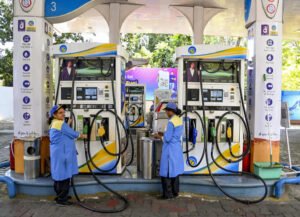
With the West Asia Crisis pushing global crude prices to a staggering $126 per barrel in early May 2026, the gap between what it costs to buy oil and what you pay at the petrol pump has reached a breaking point. Petrol and Diesel Prices in India
The Great Indian Fuel Freeze: A Timeline (2022–2026)
It is rare for any commodity to stay at the same price for four years, especially one as volatile as oil.
India’s Oil Marketing Companies face massive daily losses
This video provides an expert breakdown of why Indian oil companies are losing over ₹1,000 crore daily and the potential timeline for the next petrol price revision.999999
-
The Baseline: Regular petrol and diesel prices were essentially locked in April 2022.
-
The Strategy: The Indian government and Public Sector Oil Marketing Companies (OMCs) like IOCL, BPCL, and HPCL followed a “buffer strategy.” When global crude prices were low ($70–$80), OMCs kept the prices steady to recover previous losses. When prices spiked, they didn’t raise rates to protect consumers from inflation.
-
The 2026 Shock: The conflict in West Asia and disruptions in the Strait of Hormuz have changed the math. Crude prices surged over 70% in just 60 days during early 2026. Petrol and Diesel Prices in India
How Deep is the Dilemma? Understanding “Under-Recoveries”
When the government “freezes” prices, the cost doesn’t just disappear. Someone has to pay the difference. In India, that “someone” is the OMCs. Petrol and Diesel Prices in India
The Daily Loss of ₹1,000+ Crore
As of May 2026, Indian oil companies are reportedly losing an incredible ₹1,000 to ₹1,200 crore every single day.
-
Petrol Loss: OMCs are losing approximately ₹14 per litre.
-
Diesel Loss: The loss is even steeper, estimated at ₹42 per litre.
-
LPG Loss: Domestic cylinders are being sold at a loss of nearly ₹674 per cylinder.
The Threat to Annual Profits
The cumulative losses for the April-June 2026 quarter alone are projected to hit ₹1 lakh crore. This is enough to completely wipe out the entire annual profits of the three major state-run oil companies. Petrol and Diesel Prices in India
Understanding India’s Fuel Pricing System
How Petrol and Diesel Prices Are Decided
India officially shifted to a daily fuel price revision system in 2017. Under this mechanism, petrol and diesel prices are supposed to change every day based on international crude oil prices and currency exchange rates. Petrol and Diesel Prices in India
Why Hasn’t the Price Increased Yet?
The government has several reasons for holding the line, even as Petroleum Minister Hardeep Singh Puri warns of the mounting pressure.
-
Inflation Control: Fuel is the “mother of all costs.” A hike in diesel immediately increases the price of vegetables, milk, and daily essentials due to transport costs. Petrol and Diesel Prices in India
-
Political Management: With the 2026 election cycle having just concluded, the government has been cautious about triggering a massive public backlash. Petrol and Diesel Prices in India
-
Austerity over Hikes: Instead of a direct hike, PM Modi has urged a “Jan Andolan” (public movement) for Work From Home and Online Classes to reduce the overall national demand for fuel.
The “Two-Tier” Pricing: Is a Hike Already Here?
While “Regular” petrol remains frozen, the government has already started adjusting prices for other segments to ease the burden:
-
Premium Fuels: XP100 premium petrol has already been hiked to ₹160/litre. Petrol and Diesel Prices in India
-
Commercial LPG: Prices have seen multiple hikes, reaching nearly ₹1,000 per cylinder in some regions.
-
Industrial Diesel: Large-scale buyers are now paying significantly more than the retail consumer at the pump.
Predictions: What to Expect at the Pump in Mid-2026
Analysts suggest that the four-year freeze cannot last much longer if Brent crude stays above $110/barrel.
| Scenario | Expected Retail Change |
| Calibrated Hike | Petrol could rise by ₹5 to ₹10; Diesel by ₹3 to ₹7. |
| Excise Duty Cut | The government might cut taxes further to absorb the cost, though this hits the national budget. |
| Market Correction | If crude drops below $90, the freeze might continue for several more months. |
Russia-Ukraine War Changed Everything
The Russia-Ukraine conflict triggered a major global energy crisis. Oil prices surged sharply as supply disruptions affected international markets. Petrol and Diesel Prices in India
India began purchasing discounted Russian crude oil, which helped reduce import pressure to some extent. However, global uncertainty continued to keep oil markets unstable. Petrol and Diesel Prices in India
Impact on Common Citizens
Relief for Consumers
Stable fuel prices provide temporary relief for consumers already struggling with inflation.
When petrol and diesel rates remain unchanged:
- Daily commuting costs stay manageable
- Transport fares remain relatively stable
- Goods transportation costs rise slowly
- Household budgets face less pressure
For middle-class and lower-income families, even a ₹2-₹5 increase per litre can significantly affect monthly expenses. Petrol and Diesel Prices in India