
Patna witnessed large student demonstrations as concerns over the integrity of competitive examinations became the focus of public debate. Participants gathered at different locations across the city, calling for greater transparency in the examination process and stronger measures to protect the interests of students.
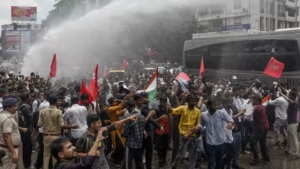
The demonstrations attracted attention from political leaders, education experts, parents, and civil society organisations. Student representatives said their movement was aimed at ensuring fairness in recruitment and entrance examinations, arguing that confidence in the examination system is essential for millions of young aspirants.
Authorities maintained security arrangements in key areas while appealing to protesters to continue their demonstrations peacefully and follow legal procedures.
Students Demand Transparency in Examination Process
Student organisations said that the primary objective of the protest was to seek greater transparency and accountability in the conduct of competitive examinations.
According to participants, any doubts surrounding examination processes can affect the confidence of students who spend months or even years preparing for important tests.
They urged authorities to strengthen monitoring systems, improve security mechanisms, and ensure that examinations remain fair for every candidate.
The Need for Stronger Examination Reforms
The recent demonstrations in Patna have once again highlighted how deeply competitive examinations influence the lives of millions of students and their families. Every year, candidates spend months or even years preparing for entrance and recruitment exams with the hope of securing admission to educational institutions or obtaining government jobs. Because of this, even small concerns about the examination process can create uncertainty among aspirants.
Education experts believe that maintaining the credibility of competitive examinations should remain a top priority for authorities. A transparent system not only protects deserving candidates but also strengthens public confidence in educational institutions. Students often expect examination agencies to communicate clearly whenever questions arise and to ensure that any concerns are addressed quickly and fairly.
Several experts have suggested that advanced digital technology could play an important role in improving examination security. Stronger encryption, secure digital monitoring, biometric verification, artificial intelligence-based surveillance, and real-time tracking of sensitive examination material are among the measures that could help reduce risks and improve transparency.
Parents have also expressed the need for greater confidence in the examination system. Many believe that years of hard work should be rewarded based solely on merit and performance. They argue that a transparent and accountable process is essential for maintaining trust among students preparing for highly competitive examinations.
Political analysts note that education-related issues frequently become part of wider public discussions because they directly affect young people and the future workforce. Regardless of political differences, there is broad agreement that examination systems should remain fair, secure, and free from irregularities.
Press Information Bureau (PIB)
Experts also recommend improving coordination between examination authorities, educational institutions, law enforcement agencies, and technology partners. Better planning, regular audits, independent oversight, and periodic security reviews can further strengthen the overall examination process.
In addition to technological improvements, clear communication with students is equally important. Timely official updates can help prevent misinformation and reduce unnecessary anxiety among candidates. Transparent investigations and regular public briefings may also improve confidence whenever concerns are raised.
Looking ahead, policymakers may continue evaluating ways to modernise examination systems while ensuring fairness and accountability. Investments in secure technology, staff training, and stronger administrative procedures could contribute to a more reliable examination environment in the years ahead.
Ultimately, the goal shared by students, parents, educators, and policymakers is the same: a competitive examination system where every candidate has an equal opportunity to succeed based on merit. Continued reforms, constructive dialogue, and institutional transparency will remain essential in strengthening public trust and supporting the aspirations of millions of young people across India.
Why Competitive Examination Integrity Matters
Competitive examinations play a significant role in determining educational and career opportunities for millions of students across India.
A transparent and credible examination system helps ensure that merit remains the deciding factor. Experts believe that public confidence in examination authorities is essential for maintaining trust in the education system.
Whenever concerns arise regarding examinations, students often demand timely investigations, clear communication, and institutional accountability.
Political Reactions
The demonstrations also triggered political responses from various parties.
Some political leaders expressed support for students’ concerns and called for comprehensive reviews of examination processes. Others appealed for patience while official agencies completed their inquiries and emphasised the importance of avoiding conclusions before investigations were complete.
Political observers noted that education-related issues frequently become part of wider public and parliamentary discussions because of their impact on millions of families.
Police Make Security Arrangements
Security personnel remained deployed across protest locations to maintain public order and ensure that demonstrations proceeded peacefully.
Officials implemented traffic management measures in several parts of Patna to minimise inconvenience for commuters while allowing protesters to assemble.
Authorities appealed to participants to cooperate with law enforcement and avoid any activities that could disrupt public safety.
Public Response
The demonstrations received mixed reactions from citizens.
Many parents and students said that transparency in examinations should remain a priority because careers often depend on these assessments.
Others stressed the importance of allowing official investigations to proceed without speculation, emphasising that verified information should guide public discussion.
Education experts also highlighted the need for continuous improvements in examination technology, security, and administrative processes.
Role of Institutions
Experts believe that strong institutions are essential for maintaining confidence in national examination systems.
Suggestions frequently discussed include:
Better Digital Security
Using advanced technology to protect examination materials.
Faster Investigations
Ensuring that concerns are examined promptly whenever they arise.
Transparent Communication
Providing timely updates to students and the public.
Independent Oversight
Strengthening monitoring mechanisms to improve credibility.
Looking Ahead
Observers believe that the coming weeks may bring further discussions between government agencies, education authorities, and student organisations.
Possible developments include policy reviews, administrative improvements, and continued dialogue aimed at strengthening confidence in competitive examinations.
Regardless of differing political viewpoints, most stakeholders agree that protecting the integrity of examinations is important for students and the education system as a whole.
Frequently Asked Questions
Why were students protesting in Patna?
Student groups said they wanted greater transparency and accountability in the conduct of competitive examinations.
What were their main demands?
Participants called for stronger examination security, transparent investigations where needed, and measures to maintain public confidence in the examination system.
How did authorities respond?
Authorities deployed security personnel, managed traffic, and appealed for peaceful demonstrations while official processes continued.
Why is examination transparency important?
A credible examination system helps ensure fairness, protects merit, and maintains public trust in educational institutions.
Conclusion
The demonstrations in Patna have once again highlighted the importance of transparency, accountability, and public confidence in competitive examinations. While opinions differ on the political aspects of the issue, there is broad agreement that students deserve a fair and trustworthy examination system.