
India Fuel Price Hike Today If there is one thing that unites the Indian middle class, it is the collective sigh we let out when fuel prices go up. Just when we thought our monthly budgets were finally settling down, we have been hit with another shocker. Petrol and diesel prices across India have suddenly jumped by Rs 3 per litre.
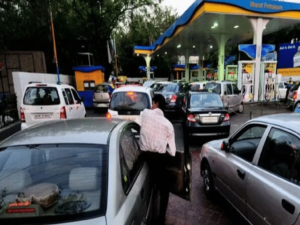
For the average commuter, a Rs 3 hike might sound like a small change when looked at in isolation, but when you are filling up a 40-litre tank, that is an extra Rs 120 gone in an instant. Over a month, that adds up to a significant dent in your wallet. But what is truly making headlines—and sparking debates across dinner tables and social media—is the timing of this hike. Just weeks ago, the government confidently reassured the public that India had “ample stock” of crude oil and that there was no immediate cause for panic.
So, what changed overnight? How did we go from having “enough fuel to keep the country running smoothly” to a steep Rs 3 price hike? In this comprehensive breakdown, we are going to dive deep into the reality of India’s fuel pricing, the math behind the madness, and what this means for your everyday life. India Fuel Price Hike Today
Verified Rates (May 15, 2026)
| City | Petrol (New Rate) | Diesel (New Rate) | Hike Amount |
| Delhi | ₹97.77 / litre | ₹90.67 / litre | ₹3.00 |
| Mumbai | ₹106.68 / litre | ₹93.14 / litre | ₹3.11 |
| Kolkata | ₹108.74 / litre | ₹95.13 / litre | ₹3.11 |
| Chennai | ₹103.67 / litre | ₹95.25 / litre | ₹2.86 |
The Sudden Shock: Understanding the Rs 3 Jump
Let us set the scene. You wake up, get ready for work, drive to the nearest petrol pump, and notice the digital meter flashing a number that is noticeably higher than it was just a few days ago. Petrol and diesel prices have been hiked by a flat Rs 3 across the board.
In a country where millions rely on personal two-wheelers, cars, and public transport daily, fuel prices dictate the rhythm of life. The Oil Marketing Companies (OMCs) in India—predominantly state-owned giants like Indian Oil Corporation (IOCL), Bharat Petroleum (BPCL), and Hindustan Petroleum (HPCL)—revise prices dynamically. However, a sudden, sharp hike of Rs 3 is rare and usually indicates a significant shift in the backend economics of fuel procurement.
Rs 100 Petrol in Delhi is One Hike Away: Rates Jump to Rs 97.77
Diesel Price Today (May 15): City-wise Full List after Centre Hikes. India Fuel Price Hike Today
The Regional Reality: Why Some Cities Suffer More
It is important to remember that the Rs 3 hike is the base increase. The final price you pay at the pump depends heavily on where you live. Because fuel in India is not under the Goods and Services Tax (GST) regime, state governments apply their own Value Added Tax (VAT) on top of the central excise duty. India Fuel Price Hike Today
The Big Question: What Hap
pened to the “Ample Stock” Claim?
This is the part that has left most citizens frustrated. Over the past few months, amidst global geopolitical tensions and supply chain disruptions, government officials and petroleum ministry spokespersons have repeatedly stated that India’s strategic petroleum reserves and active procurement contracts mean we have “ample stock.”
The Difference Between Supply Security and Price Stability
Here is the harsh reality of global economics: supply security ensures that our petrol pumps do not run dry. It means there will not be rationing, and you will not have to wait in line for hours just to get a few litres of fuel. However, supply security does not guarantee price stability. India Fuel Price Hike Today
They assured the nation that despite the chaos in the global oil markets, India’s supply was secure. And to be fair, they were not lying. Having stock and the price of that stock are two entirely different things.
Behind the Scenes: Why Are Fuel Prices Actually Rising?
To truly understand why you are paying Rs 3 more today, we need to look beyond our borders. India imports roughly 85% of its crude oil requirements. This makes us incredibly vulnerable to international market fluctuations. Let us break down the primary culprits behind this price surge.
Even if our storage tanks are full, the fuel was purchased at varying prices over time. Furthermore, OMCs have to constantly buy new crude oil to replenish what is being consumed. If the international market price of crude goes up, the OMCs have to pay more for their next shipment. If they absorb that cost for too long, they run into massive financial losses. Eventually, they pass that burden onto the consumer. India Fuel Price Hike Today
The Rupee vs. Dollar Depreciation
This is a factor that often flies under the radar for the average consumer, but it is massive. International crude oil is traded in US Dollars. When the Indian Rupee (INR) weakens against the US Dollar (USD), India has to spend more Rupees to buy the exact same amount of oil.
For example, if oil is $80 a barrel, and the exchange rate is Rs 80 per dollar, a barrel costs Rs 6,400. If the Rupee depreciates to Rs 83 per dollar, that same $80 barrel now costs Rs 6,640. Even if the global price of oil does not change by a single cent, a weaker Rupee automatically makes fuel more expensive for India. This exchange rate volatility has played a massive role in the recent price hikes.
Oil Marketing Companies Recovering Losses
During major election cycles or periods of extreme inflation, the government often informally directs OMCs to freeze retail prices to prevent public outcry. While prices at the pump stay the same, the OMCs are buying expensive crude internationally, bleeding money in the process. India Fuel Price Hike Today
The Heavy Burden of Taxation
We cannot discuss fuel prices in India without addressing the elephant in the room: taxes. The base price of refined petrol or diesel is surprisingly low. However, by the time it reaches your vehicle, it has been heavily inflated by taxes.
-
Central Excise Duty: Levied by the Central Government.
-
State VAT: Levied by the State Governments.
-
Dealer Commission: The margin for the petrol pump owners.
In many states, taxes make up roughly 40% to 50% of the retail price of fuel. Whenever global crude prices drop, governments often hike the excise duty to capture the margin as revenue, preventing the retail price from dropping.
The Domino Effect: How This Rs 3 Hike Impacts Your Daily Life
You might think, “I don’t drive that much, so a Rs 3 hike won’t hurt me.” Unfortunately, that is not how inflation works. Fuel is the lifeblood of the economy. When the cost of moving things goes up, the cost of the things themselves goes up. Here is how this hike will trickle down into your daily life. India Fuel Price Hike Today
The Electric Vehicle (EV) Revolution
The most permanent solution to fuel price anxiety is moving away from fossil fuels entirely. The adoption of Electric Vehicles (EVs) in India, especially in the two-wheeler and three-wheeler segments, is growing at an unprecedented rate.