
France’s Jet Ego Costs Big: In a rapidly shifting global defence market, France’s assertive approach to selling its flagship fighter jets is beginning to show unintended consequences. Once celebrated for its strategic independence and cutting-edge aviation technology, Paris is now facing diplomatic friction and commercial setbacks as key partners like the United Arab Emirates (UAE), India, and Germany signal growing dissatisfaction. France’s Jet Ego Costs Big
The UAE Walkout: A €3.5 Billion Reality Check
The most immediate shockwave hit in early April 2026. The United Arab Emirates—historically one of France’s most loyal and deep-pocketed defense partners—officially pulled the plug on its financial participation in the Rafale F5 program.
What was the deal?
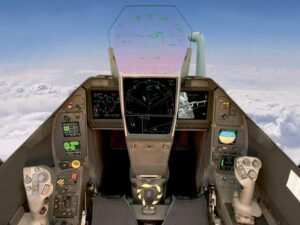
The Rafale F5 isn’t just an upgrade; it is being designed as a “Super Rafale” capable of flying alongside stealth combat drones and carrying next-generation nuclear missiles. France, facing a tight domestic budget, invited the UAE to co-finance the program.
-
The Investment: The UAE was expected to contribute roughly €3.5 billion ($3.8 billion) toward the €5 billion development cost. France’s Jet Ego Costs Big
-
The Reason for the Collapse: Abu Dhabi reportedly demanded more than just the planes; they wanted technology transfer (ToT) and the involvement of local Emirati companies in the core manufacturing. France’s Jet Ego Costs Big
-
The “Ego” Factor: France refused. Citing “sovereignty” and “strategic secrets,” Paris offered the UAE the chance to pay for the development but denied them access to the “black box” technology or industrial participation.
The Consequence
The UAE’s exit has left a massive hole in France’s defense budget. French taxpayers must now shoulder the entire €5 billion cost alone. For the UAE, this marks a shift toward diversifying their fleet, potentially looking toward US or even Chinese alternatives, signaling that “chequebook diplomacy” without technology sharing is a thing of the past. France’s Jet Ego Costs Big
France’s jet ego costs big: UAE walks out, India angry, Germany frustrated
India Will Not Gain Access to Rafale Electronics — Paris Prefers to Keep Critical Tech Under Control
India’s Growing Frustration: The “Make in India” Hurdle
While the India-France relationship remains “strategically soar,” beneath the surface of high-level summits, Indian negotiators are becoming increasingly firm. New Delhi is no longer content being a “customer”; it wants to be a “creator.” France’s Jet Ego Costs Big
The MRFA Deadlock
India is currently negotiating the Multi-Role Fighter Aircraft (MRFA) deal for 114 jets—a contract worth an estimated $35 billion.
-
The Indian Demand: Prime Minister Modi’s government has made it clear: the majority of these jets (roughly 96 units) must be built in India with 100% technology transfer of critical components, including the engine’s “hot section” technology.
-
The French Hesitation: While French President Emmanuel Macron has hailed India as a “sovereign ally,” French industrial giant Dassault Aviation has been protective of its proprietary source codes and manufacturing secrets.
-
The Engine Issue: India’s fifth-generation fighter (AMCA) depends on a joint venture with France’s Safran. While a deal was signed in late 2025, Indian officials are reportedly “angry” or at least “deeply frustrated” by the slow pace of actual knowledge transfer. France’s Jet Ego Costs Big
-
“India is the largest buyer of the Rafale today. If France treats us like a junior partner rather than a co-developer, the ‘Special Relationship’ will face the same fatigue we saw with the UAE,” notes a senior retired IAF official.
The German Deadlock: The Death of the “European Dream”
If the UAE and India represent export frustrations, Germany represents a domestic nightmare for France. For years, the two nations have tried to build the Future Combat Air System (FCAS)—a 6th-generation jet intended to replace the Rafale and the Eurofighter.
What is the “Source Code” and Why Does it Matter?
Think of a modern fighter jet like a smartphone. You can own the hardware (the screen, the battery, the camera), but if you don’t have the password to the operating system (the source code), you cannot install new apps or change how the phone works.
In the Rafale, the source code controls three “crown jewels”: France’s Jet Ego Costs Big
-
The RBE2 AESA Radar: The “eyes” that detect enemy stealth jets.
-
The SPECTRA System: The electronic warfare suite that jams enemy missiles.
-
The Mission Computer: The “brain” that tells the pilot when to fire.
The Problem: Without the source code, India cannot independently integrate its own indigenous weapons, like the Astra Mk2 missile or the BrahMos-NG, without flying the jets back to France or giving French engineers access to secret Indian missile data. France’s Jet Ego Costs Big
The 2025 “Wake-Up Call”
The tension peaked following reports of a localized military clash with Pakistan in May 2025. While India has not officially confirmed any losses, defense analysts and French outlets (like L’Essentiel de l’Éco) suggest that the IAF’s inability to “reprogram” the Rafale’s electronic warfare libraries in real-time was a critical vulnerability. France’s Jet Ego Costs Big
The UAE Deal That Fell Apart
The UAE, long considered a key defence partner of France, had been in advanced discussions for acquiring additional Rafale jets. While Abu Dhabi had earlier signed a landmark deal for 80 Rafale aircraft in 2021, recent negotiations for further cooperation reportedly hit a wall. France’s Jet Ego Costs Big
Sources suggest that disagreements emerged over pricing, maintenance autonomy, and technology transfer. The UAE, which has been diversifying its military suppliers, grew increasingly frustrated with France’s reluctance to provide deeper access to critical systems.
This ultimately led to the UAE stepping back from further engagement — a move seen as both a commercial setback and a diplomatic signal to Paris. France’s Jet Ego Costs Big
For France, losing momentum in the Gulf — a region with deep pockets and strategic importance — could have long-term implications.
France’s “Black Box” Argument
France, led by Dassault Aviation and Thales, views the source code as their most guarded intellectual property. Their argument is simple:
-
Proprietary Secrets: They have spent 30 years and billions of Euros developing this logic. Sharing it could allow it to leak to global competitors. France’s Jet Ego Costs Big
-
The Precedent: If they give the code to India, then Egypt, Qatar, and Indonesia will demand it too.
-
The “Plug-and-Play” Offer: France has offered a compromise—providing APIs (Application Programming Interfaces). This would allow India to “plug in” its missiles without seeing the “inner logic” of the jet. India, however, has signaled that this is not enough for “Atmanirbhar Bharat.” France’s Jet Ego Costs Big
The Russian “Su-57” Shadow
Sensing the friction between Paris and New Delhi, Russia has made a move. In early 2026, Moscow reportedly offered India a deal for the Su-57E stealth fighter with full source code access and joint production—mirroring the successful Su-30MKI program.
This has put immense pressure on France. India is currently France’s largest customer for the Rafale; if India walks away from the 114-jet MRFA deal because of the source code, the French aerospace industry faces a financial crisis. France’s Jet Ego Costs Big
India’s Growing Unease
India, one of France’s most important defence customers, is also reportedly reassessing its position. France’s Jet Ego Costs Big
The Indian Air Force currently operates 36 Rafale jets, procured in a government-to-government deal that was hailed as a major upgrade to India’s air combat capabilities. However, discussions around further acquisitions — including potential naval variants for aircraft carriers — have faced delays. France’s Jet Ego Costs Big
The Current Stand-Off
| Feature | French Offer (Rafale) | Indian Demand |
| Manufacturing | 96 jets “Made in India” | 100% Indigenization over time |
| Engine Tech | 100% ToT for M88 engine (New for 2026) | Full IPR for the AMCA engine |
| Source Code | Refused (Proprietary) | Mandatory for radar and EW |
| Weaponry | French (Meteor/Scalp) | Indigenous (Astra/BrahMos) |
The Verdict for India
The Indian Air Force is currently operating with roughly 31 squadrons against a required 42. The need for jets is urgent, but the MoD is standing firm. France’s Jet Ego Costs Big
The message from New Delhi is clear: “We will not pay billions to be dependent.” As of today, the Rafale deal is at a crossroads. France has agreed to share the “hot engine” technology (a massive win for India’s AMCA project), but they are clutching the “software keys” tightly. France’s Jet Ego Costs Big
What This Means for India’s Defense Strategy
| The Risk | The Opportunity |
| Delays: If France loses UAE funding, the development of the Rafale F5 (which India wants) could be delayed. | Leverage: With the UAE gone and Germany hesitant, India is now France’s only massive, reliable customer. New Delhi can demand better terms. |
| Costs: France might try to pass on the development “gap” left by the UAE to India via higher per-unit prices in the MRFA deal. | Total ToT: India can push for a “100% Technology Transfer” or “IPR Sharing” as a condition for the 114-jet deal, knowing France cannot afford to lose India. |